
- +923107774151
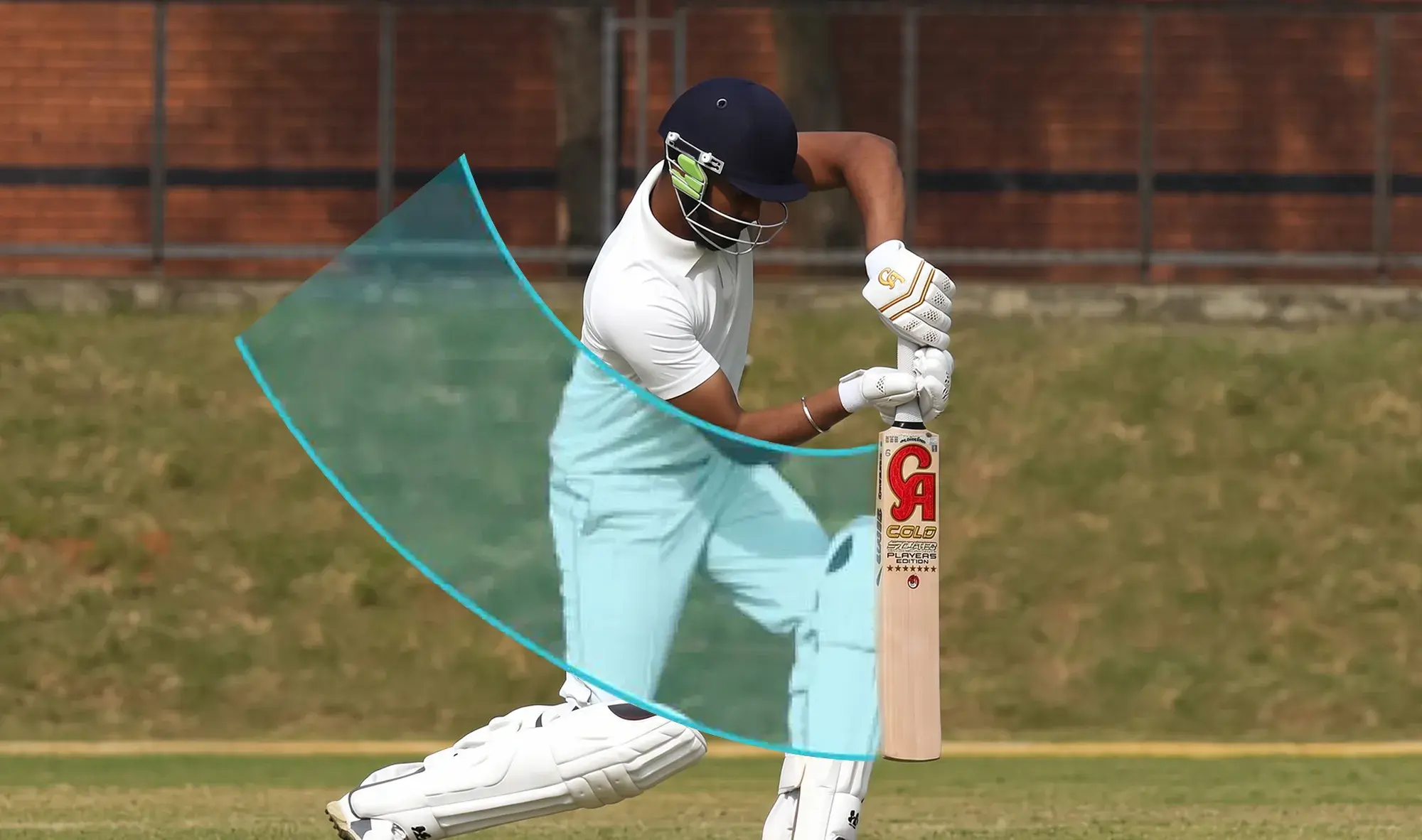
Walk into any cricket shop and you'll see it happen every time. A batter picks up a bat, holds it in one hand, and immediately says: "Too heavy. Show me something lighter."
It's the most common mistake cricketers make when choosing equipment. And it's costing them runs.
Here's what most players miss: cricket bat balance — how the weight is distributed across the blade and handle — has a far greater impact on your shot timing, bat speed, and control than the number on the scale. A well-balanced bat at 2 lb 10 oz can feel lighter and swing faster than a poorly balanced bat at 2 lb 7 oz.
This post explains exactly why balance beats raw weight, how professionals like Virat Kohli and Steve Smith choose their bats based on balance profiles, and how you can find the right pickup for your game. By the end, you'll never shop for a cricket bat by weight alone again.
Bat balance refers to how the weight of a cricket bat is distributed along its length — from handle to toe. It determines where the centre of gravity sits and directly controls how the bat feels when you lift, swing, and strike the ball.
Two bats can weigh the exact same amount on a scale but feel completely different in your hands. That difference is balance.
Think of it this way: imagine holding a hammer by its handle versus holding it by the head. Same total weight. Completely different feel. Cricket bats work on the same principle — where the mass sits changes everything about how the bat performs.
Most club cricketers obsess over scale weight. They want a bat that weighs 2 lb 8 oz or 2 lb 9 oz because they assume lighter always means faster hands. But that logic is incomplete.
Scale weight tells you the total mass of the bat. That's it. It doesn't tell you:
Balance answers all of those questions.
| Factor | Scale Weight | Bat Balance |
|---|---|---|
| What it measures | Total mass in lbs/oz or grams | Distribution of mass along the blade |
| Impact on bat speed | Indirect — heavier = slower in general | Direct — controls how fast the bat rotates |
| Impact on timing | Minimal | Major — determines pickup and stroke control |
| Impact on power | Some — more mass = more momentum | Significant — proper balance maximizes energy transfer |
| Impact on fatigue | Moderate | High — poor balance exhausts wrists and shoulders quickly |
| What pros optimize for | Secondary consideration | Primary consideration |
A well-balanced bat picks up lighter than it actually weighs, giving you bat speed AND mass behind the ball. That's the sweet spot every serious cricketer should chase.
Here's why balance matters more than weight, explained through physics.
When you swing a cricket bat, you're rotating it around a pivot point — your hands at the top of the handle. The ease or difficulty of this rotation isn't determined by total mass alone. It's determined by the moment of inertia (MOI) — the bat's resistance to rotational movement.
The farther the mass sits from your hands, the higher the MOI, and the harder the bat is to swing.
This is why two bats of identical weight can feel drastically different:
Bat A will generate faster bat speed with the same physical effort. And in cricket, bat speed is the primary driver of both timing and power.
A well-balanced bat doesn't just feel better. It's mechanically more efficient at transferring your body's energy into the ball.
Not all balance profiles are equal — but they each serve a purpose. Understanding these three categories helps you match your bat to your batting style.
The mass sits higher in the blade, closer to your hands. This produces:
Best for: Top-order batters facing the new ball, technically sound players, and those who rely on timing over power.
Pro example: Steve Smith uses a lighter, high-balance bat that facilitates his unique movement and rapid adjustments at the crease. His bat weighs around 2 lb 8 oz — lighter than most professionals — because his game demands extreme control and quick reactions.
Mass is spread evenly across the blade, producing a balanced feel that doesn't favor any particular shot type. This delivers:
Best for: All-rounders, versatile batters who play across formats, and players who want one bat that does everything well.
Pro example: Virat Kohli's custom MRF bat weighs approximately 1.20–1.22 kg with a mid-balance profile. Despite being surprisingly light for a power hitter, the balanced weight distribution gives him exceptional timing and wrist work — the foundation of his run-scoring dominance across all three formats.
Mass is concentrated lower in the blade, toward the toe. This creates:
Best for: Middle-order power hitters, T20 specialists, and finishers who bat in the death overs.
Pro example: MS Dhoni famously used a bottom-heavy, low-profile bat with a low sweet spot — engineered specifically for his signature helicopter shot and yorker drives in the death overs.
Balance isn't random. It's engineered through specific design choices in the bat's physical profile. Here's what influences it:
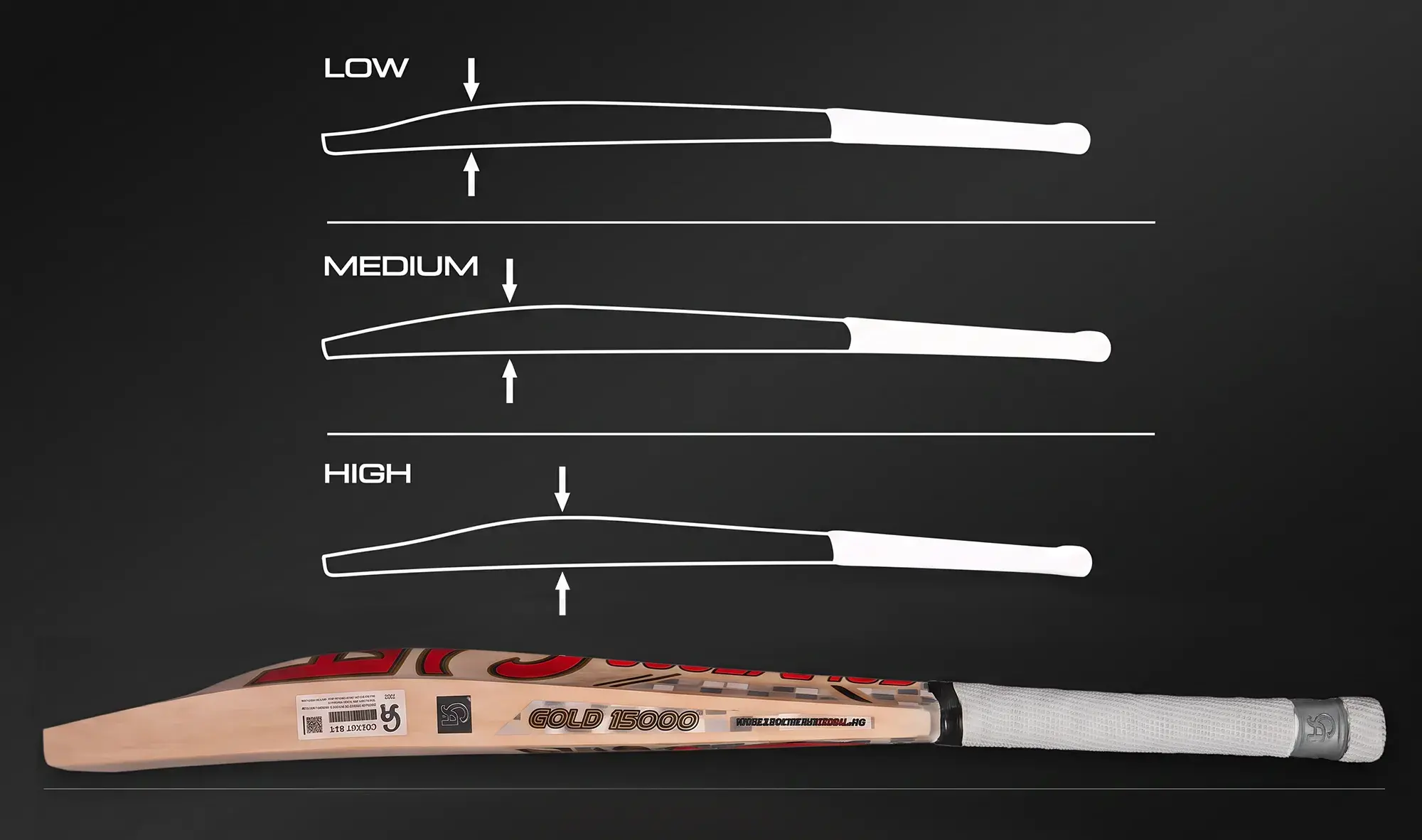
The spine is the central ridge running down the back of the bat. A higher, more pronounced spine concentrates mass in the middle-to-upper blade, raising the balance point and producing a lighter pickup. A flatter spine distributes mass lower, creating a heavier feel.
This is why a Virat Kohli "duckbill" spine profile often picks up lighter than a bottom-heavy power profile — even at the exact same scale weight. The mass is simply positioned differently.
Modern bats feature edges between 35mm and 45mm+. Thicker edges add mass to the sides of the blade, increasing the moment of inertia and making the bat feel more stable on impact — but also slightly harder to maneuver.
Edges above 45mm can make a bat feel heavier than its scale weight suggests, even if the total mass is moderate.
The sweet spot — the area of the blade that produces maximum power with minimum vibration — is directly tied to balance:
When the sweet spot aligns with where you naturally make contact with the ball, every shot feels effortless. When it doesn't, you're fighting the bat instead of playing with it.
A heavier, squared-off toe adds weight to the lowest part of the blade, lowering the balance point. A rounded, lighter toe raises it. This single element can shift how a bat picks up by several perceived ounces.
Here's a revealing fact: very few modern professionals use bats above 1,250 grams (approximately 2 lb 12 oz). The trend has moved firmly toward lighter bats with optimized balance profiles.
Why? Because the modern game — especially T20 and ODI cricket — demands fast hands, quick decision-making, and the ability to hit 360 degrees. A heavy bat with poor balance limits all three.
| Player | Approximate Bat Weight | Balance Profile | Playing Style |
|---|---|---|---|
| Virat Kohli | 1.20–1.22 kg (~2 lb 10 oz) | Mid-balance | Timing-based, all-format versatility |
| Steve Smith | ~2 lb 8 oz | High-balance | Unorthodox technique, quick adjustments |
| Joe Root | ~2 lb 9 oz (2.8–2.9 lbs) | Mid-to-high balance | Classical stroke play, control-focused |
| Babar Azam | ~2 lb 9–10 oz | Mid-balance | Precise timing, front-foot dominant |
| Rohit Sharma | ~2 lb 14 oz+ | Low-to-mid balance | Power hitting, large sweet spot |
| MS Dhoni | ~2 lb 12 oz | Low balance | Bottom-heavy for helicopter shots |
Notice the pattern: every elite batter chooses balance profile first, weight second. They match the balance to their technique, batting position, and the conditions they play in — not to a magic number on a scale.
Stop relying on the one-handed lift test. It tells you almost nothing useful. Here's how to properly assess bat balance:
Hold the bat by the handle with one hand and extend your arm straight in front of you. Hold it for 10 seconds. A well-balanced bat will feel manageable. A poorly balanced bat will strain your wrist immediately — regardless of scale weight.
Take the bat and play your five most common shots in shadow form — a drive, a pull, a cut, a defensive block, and a sweep. Focus on how the bat moves through each stroke:
Hold the bat in your normal grip and tap the toe on the ground repeatedly. A balanced bat will bounce back into position naturally. An unbalanced bat will feel "dead" or want to fall to one side.
Have someone lightly bounce a ball onto different areas of the bat face while you hold it in your stance. Note where the bat responds with the least vibration and most rebound. That's your sweet spot. If it doesn't align with where you naturally make contact during your regular shots, the balance profile isn't right for your technique.
Here's a practical guide to choosing the right balance for your game:
If you're a top-order batter (Openers, No. 3):
You face the new ball, which means pace, swing, and bounce. You need a bat with mid-to-high balance for quick pickup, fast hands, and the ability to adjust shot selection late. Go lighter on scale weight (2 lb 7 oz – 2 lb 10 oz) with a higher sweet spot.
If you're a middle-order batter (No. 4–6):
You face older bowling and need to accelerate the run rate. A mid-balance bat works best — versatile enough for building an innings and powerful enough for boundary hitting. Scale weight can sit in the 2 lb 9 oz – 2 lb 12 oz range.
If you're a finisher or lower-order power hitter:
You walk in with 5–10 overs left and need to clear the boundary from ball one. A low-balance, bottom-heavy bat with a low sweet spot maximizes power on lofted shots and yorker drives. Accept the heavier pickup because you're not batting for 50 overs.
If you're an all-rounder:
You need to bat in different situations depending on match context. A true mid-balance bat with a medium sweet spot gives you the widest range of shot options without compromising on any single area.
If you play tape ball cricket:
Tape ball cricket demands fast bat speed and aggressive stroke-making. A lightweight bat with a high-to-mid balance and wide sweet spot is ideal. Check out CA International's tapeball bat collection — purpose-built for the format's explosive style.
Copying a pro's exact weight without matching their balance profile. Virat Kohli uses a ~2 lb 10 oz bat, but his custom mid-balance profile is what makes it work for his technique. Buying a random 2 lb 10 oz bat doesn't replicate his setup.
Ignoring pickup in favor of scale weight. Two bats at 2 lb 9 oz can feel worlds apart. Always test pickup through shadow batting, not by reading the label.
Using the same bat weight across all formats. T20 demands faster hands than Test cricket. Many serious players adjust their bat's balance profile (or switch bats entirely) based on the format.
Choosing bats for looks instead of performance. Big edges and flashy stickers don't guarantee good balance. Some of the most aesthetically striking bats have terrible weight distribution.
Never re-testing your ideal weight. Your strength, technique, and fitness change over time. What worked last season might not work this season. Re-evaluate your bat balance every time you buy.
A detail most players overlook: your bat's balance shifts as you use it.
The knocking-in process compresses the willow fibers, subtly altering weight distribution. Moisture absorption (from playing in damp conditions or improper storage) adds weight unevenly. Cracks near the toe change how mass is distributed. Anti-scuff sheets and extra grips add small amounts of weight at specific points.
Maintenance tips to preserve your bat's balance:
Proper bat care isn't just about durability. It's about maintaining the balance profile you chose in the first place. Explore CA International's full cricket equipment range for gear designed to perform — and last.
Perform the arm extension test: hold the bat by the handle with one hand and extend your arm horizontally. A well-balanced bat feels manageable for 10+ seconds. Then shadow bat your five most common shots. If the bat flows naturally through each stroke without pulling, dragging, or feeling sluggish, the balance is right for your game. If you're fighting the bat at any point in the swing, the balance profile doesn't match your technique.
Most modern professionals use bats weighing between 1.10 kg and 1.25 kg (approximately 2 lb 7 oz to 2 lb 12 oz). Virat Kohli bats with around 1.20 kg, Steve Smith prefers approximately 2 lb 8 oz, and Joe Root sits around 2 lb 9 oz. The trend across professional cricket is toward lighter bats with precisely optimized balance profiles — proving that how weight is distributed matters more than how much total weight the bat carries.
Absolutely. Balance directly controls how efficiently your body's energy transfers into the ball. A properly balanced bat maximizes this energy transfer, meaning you generate more power with less effort. A low-balance (bottom-heavy) bat can produce raw power on lofted shots, but a mid-balance bat often produces more consistent power across a wider range of strokes because it maintains bat speed through the entire hitting zone.
Ideally, yes. T20 cricket demands faster bat speed and 360-degree stroke-making, so a lighter bat with mid-to-high balance suits the format best. Test cricket allows you to settle in and play longer innings, so a slightly heavier bat with a mid-balance profile works well — you need the extra mass for sustained driving but can't afford the fatigue of a bottom-heavy bat across 200+ deliveries. Many serious players own format-specific bats or at minimum choose different balance profiles for limited-overs vs long-form cricket.
The next time you shop for a cricket bat, resist the urge to ask for a lighter one. Instead, pick it up and swing it. Play your shots. Feel how it rotates. Check where the weight sits. Test whether the sweet spot aligns with your natural contact point.
Cricket bat balance is the hidden variable that separates bats you fight against from bats that feel like a natural extension of your hands. The best players in the world — Kohli, Smith, Root, Babar — all select their bats based on balance profile first and weight second. Your bat selection should follow the same principle.
A bat that picks up well, flows through your strokes, and places its sweet spot exactly where you need it will always outperform a bat that simply weighs the right amount on a scale.
CA International has been making top-quality cricket equipment and sports apparel since 1958. Our products help players in all types of cricket — from long Test matches to quick T20 games. We keep researching and improving our equipment to match the way cricket is evolving today.
Why Cricket Bat Balance Can Matter More Than Bat Weight
Why Tape Ball Cricket Is So Popular in Pakistan
Best Thigh Guards for Cricketers in 2026
The Best Cricket Helmets with Advanced Face Guard Technology
The Story Behind English Willow From Forest to Cricket Pitch
How to Replace a Cricket Bat Grip Like a Professional
Why Quality Cricket Gear Matters in Competitive Matches
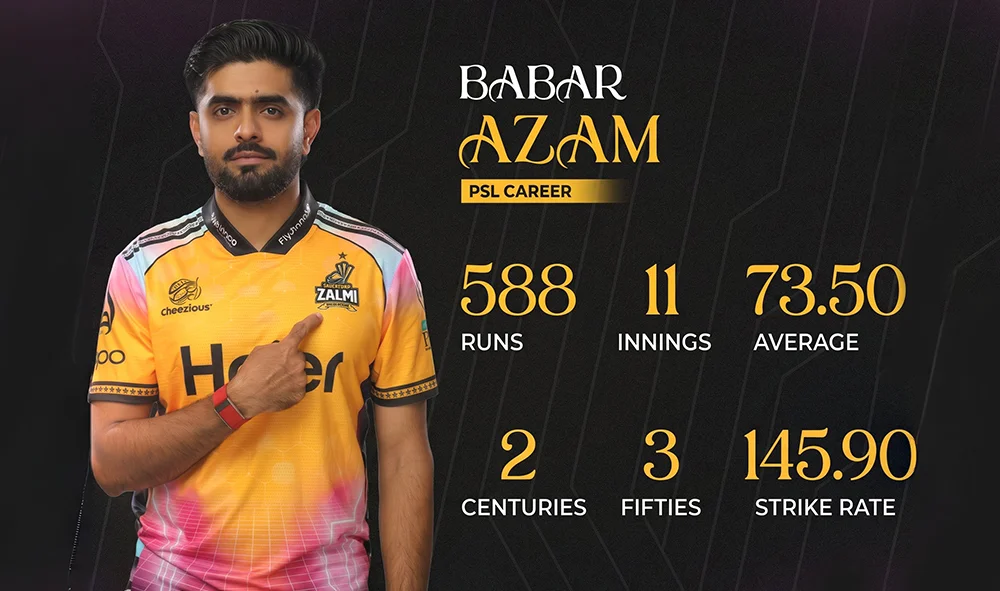
PSL 2026 Highest Run Scorer: Babar Azam Dominates with 588 Runs
 Multikart Angular
 Multikart React
 Multikart Shopify